More Protein Stops Being More Results
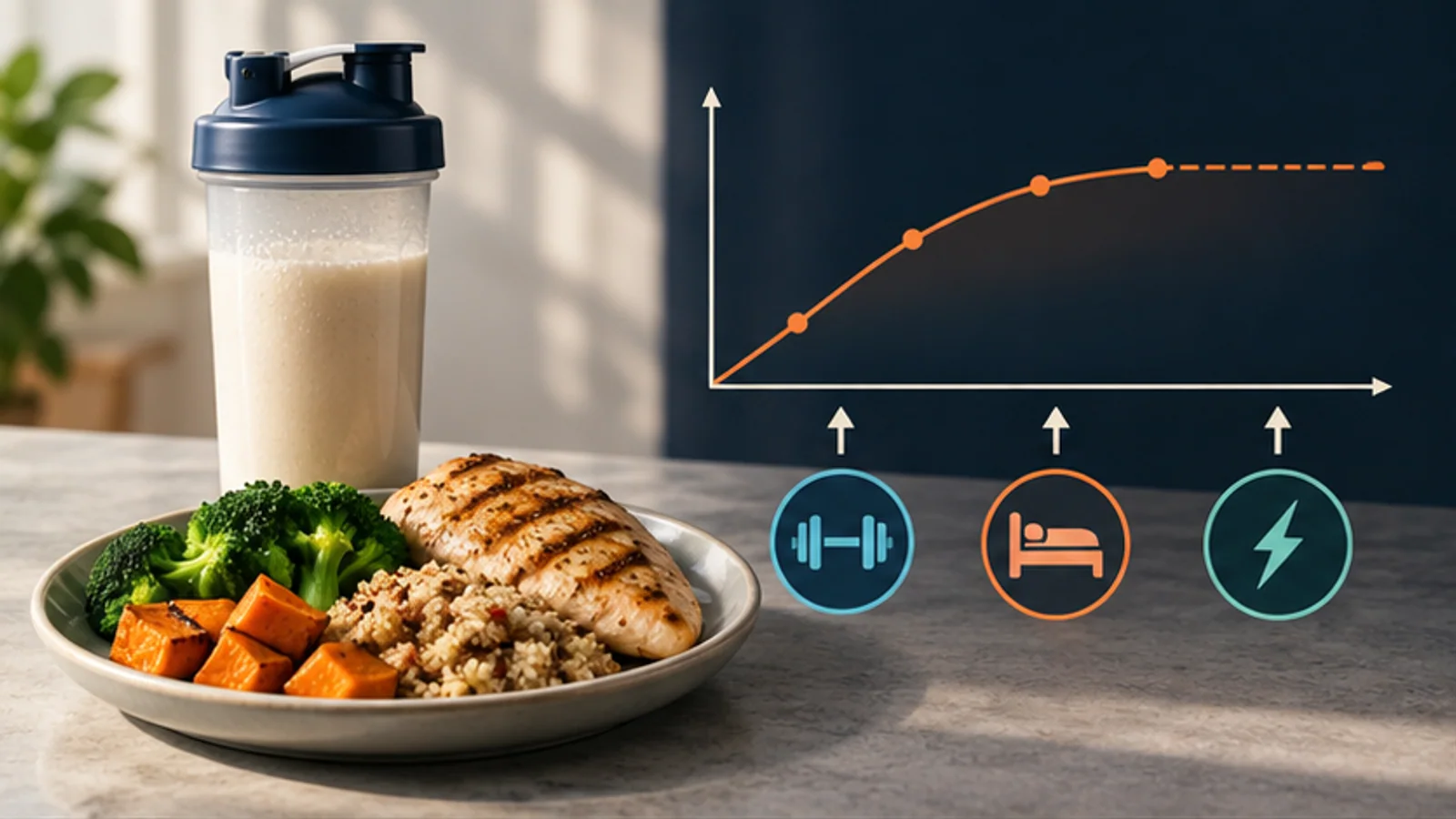
Image: NYBod
Protein marketing has a wonderfully convenient model: if some supports muscle, more must build more muscle. Human adaptation is less cooperative.
A large meta-analysis of resistance-training studies found that protein supplementation modestly improved strength and fat-free-mass gains, but estimated no further average fat-free-mass benefit beyond roughly 1.62 grams per kilogram per day in the studied conditions. Another dose-response review found strength benefits rising with total intake up to around 1.5 g/kg/day, with no further gains observed beyond that point.
Those are population estimates, not a personal cliff. They are still strong evidence against assuming that 250 grams is automatically better than 150.
Start with context
Protein needs and useful targets vary with body size, energy intake, age, training, food preference, and medical context. A person dieting aggressively may make different choices from someone maintaining weight. Someone with kidney disease needs medical guidance, not a gym calculator.
Use a range, then judge the whole plan:
- Is total energy compatible with the goal?
- Is resistance training progressive and repeatable?
- Are meals tolerable and affordable?
- Does the plan crowd out fiber, fruit, vegetables, or needed fats and carbohydrates?
- Is the supplement solving convenience or selling anxiety?
Food first is not a moral rule
Powder can be convenient, shelf-stable, and easy to measure. It is not automatically superior or inferior to food. The relevant comparison is total diet, cost, tolerance, and whether the product helps meet a sensible target.
Check third-party testing where contamination matters, especially for tested athletes. Avoid products promising drug-like results from a flavored scoop.
The spicy comparison
The marginal shake competes with sleep, groceries, coaching, equipment, and time. Once intake is adequate, the next dollar may produce more progress by making training consistent or recovery possible.
Measure results over weeks: performance, body measurements under consistent conditions, hunger, digestion, and adherence. Do not diagnose “low protein” from one bad workout.
Sources and limits
- PubMed: protein supplementation and resistance-training meta-analysis
- PubMed: protein intake and strength dose-response meta-analysis
The studies report averages across selected populations and protocols. This article does not replace medical or dietetic advice.
Key takeaway
Adequate protein supports training. Excess protein does not create unlimited adaptation. Meet a defensible range, then improve the training and life that must turn it into results.
proteinstrength trainingmuscle gainsupplements