Protein Targets for Training: A Context-Aware Guide
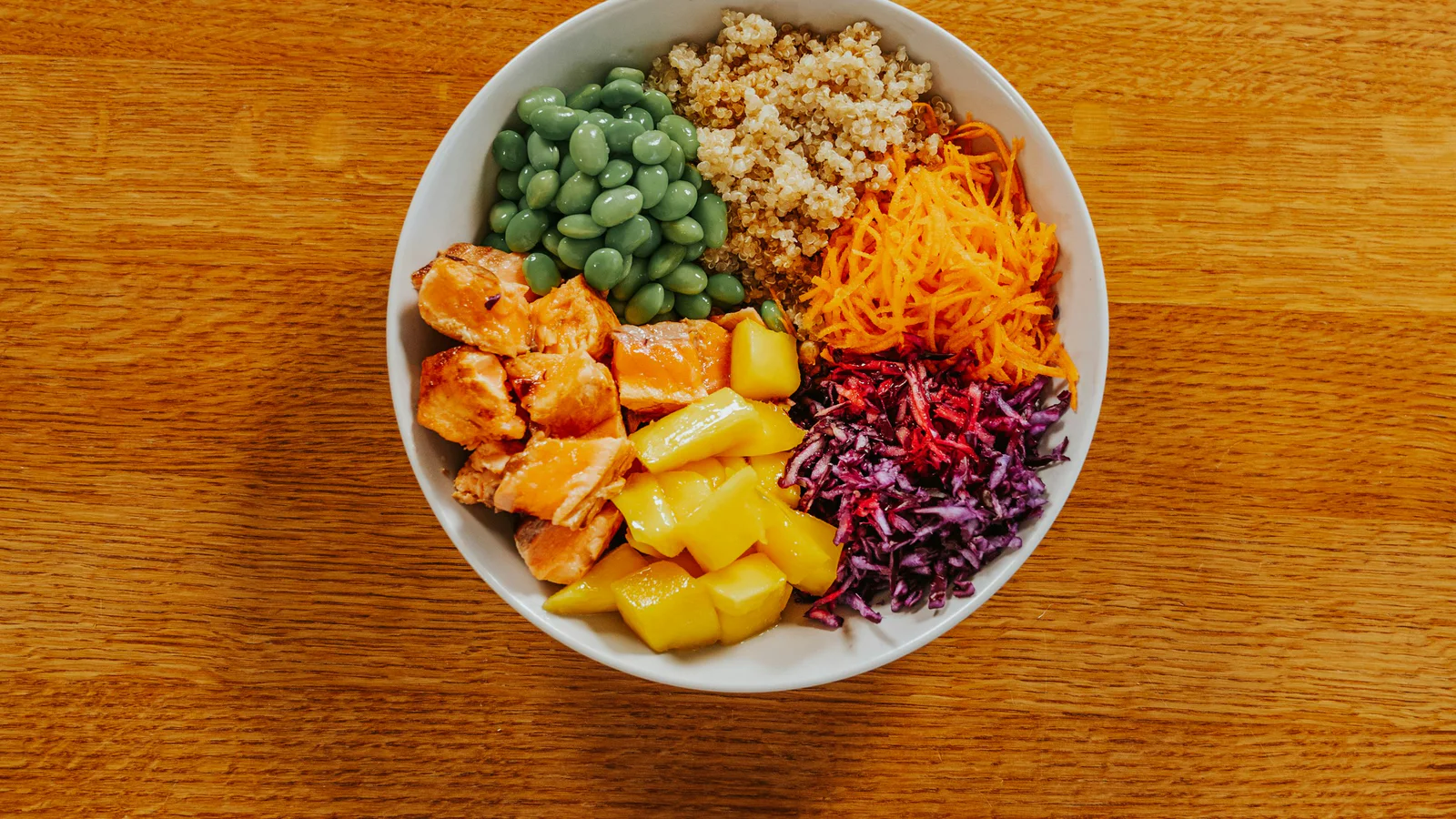
Image: Oskar Kadaksoo / Unsplash
Evidence check: 27 July 2026. Protein needs vary with body size, training, diet, age, health, pregnancy, and clinical circumstances.
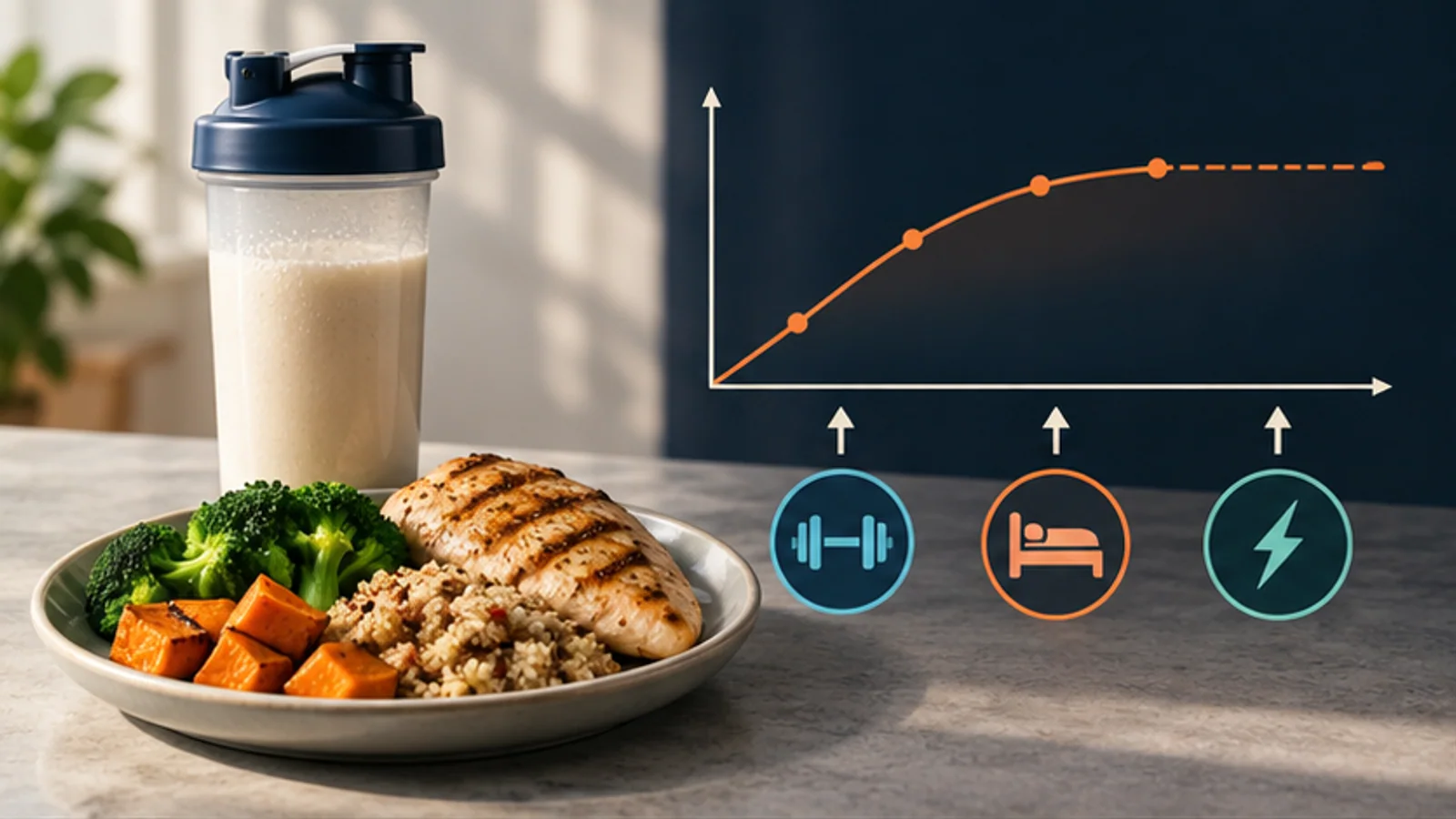
There is no universal 1.6-2.2 g/kg prescription for everyone trying to change body composition. The NIH Office of Dietary Supplements summarizes guidance of about 1.2-2.0 grams of protein per kilogram of body weight per day for athletes, with needs influenced by training and energy intake. See the current NIH exercise and athletic performance fact sheet.
That range is educational population guidance, not an individualized medical target.
Convert a selected target correctly
The arithmetic is:
body weight in kilograms × grams per kilogram = grams per day
Illustrative calculation—not a recommendation:
An 80 kg adult using a professionally selected target of 1.6 g/kg would calculate 80 × 1.6 = 128 grams per day.
The example does not establish that 1.6 g/kg is suitable for that person.
Total intake comes first
Meal timing cannot compensate for chronically inadequate total food or protein intake. At the same time, protein does not by itself “make the body burn fat.” Changes in fat and lean mass depend on the larger training, energy, health, and recovery context.
What distribution studies show
Primary studies can inform meal planning without creating universal rules:
- A controlled study compared different protein-feeding patterns after resistance exercise in a specific laboratory setting.
- Another study found a different muscle-protein-synthesis response to 20 g versus 40 g of whey protein after whole-body resistance exercise in its participants.
These results do not prove that every meal must contain 20-40 g, that every person responds the same way, or that a supplement is required.
Build meals from practical sources
Protein can come from food or supplements. Relevant considerations include:
- total calories and overall diet quality;
- allergies and intolerances;
- sodium, saturated fat, or added ingredients;
- cost and convenience;
- whether plant sources are varied and sufficient;
- third-party testing for supplements, particularly for competitive athletes.
A powder is a convenience product, not automatically a superior source.
Avoid “wasted protein” claims
Protein above a selected target is not accurately described as simply “wasted.” The body digests and metabolizes amino acids through multiple pathways. The useful question is whether additional intake improves the intended outcome enough to justify its cost and fit within the person’s health and diet.
When a general range is not enough
Obtain qualified medical or dietetic advice for:
- kidney or liver disease;
- pregnancy or breastfeeding;
- children or adolescents;
- eating-disorder history;
- significant weight loss or gain;
- medication or medical treatment that affects nutrition;
- symptoms or laboratory abnormalities.
Do not use a fitness article to override a clinician’s protein, fluid, electrolyte, or energy guidance.
Key takeaway
Start with an authoritative population range, then adjust only for the individual’s training, total diet, health, and professional guidance. Total daily intake matters, but precise timing and high-dose supplements should not be oversold.
General nutrition and fitness education only, not medical advice or individualized nutrition therapy.
proteinnutritionbody recompositionmuscle buildingdiet